

Women founders hear a lot about structure.
We’re told to tighten our systems, improve our processes, and become more organized. Get sh!t done.
The message is usually some version of: if you had better discipline, everything would feel easier.
But most women I work with don’t lack discipline.
They know how to show up. They know how to carry responsibility. They’ve spent years building careers, businesses, families, communities, and lives that depend on them. They know how to work hard and follow through.
What I see more often is a different challenge altogether.
The strategies that once worked no longer create the same results.
Women who have always been able to rely on effort, determination, and perseverance find themselves working just as hard while gaining less traction. They push harder only to feel more exhausted. They add more structure only to feel more restricted.
All of this can feel like continuing to do what has always worked while wondering why it suddenly doesn’t.
At first, it can feel like a personal failure.
In reality, it is often a sign that a season has changed.
Why What Worked Before Begins to Fail Founders
Traditional business structures tend to assume that growth happens in a straight line. It assumes consistent energy, predictable capacity, and uninterrupted progress. It imagines a version of life where every plan unfolds exactly as expected.
Most women’s lives don’t work that way.
Our lives are layered and nuanced. We move between seasons of expansion and seasons of care. Relationships change. Priorities shift. Capacity fluctuates. What serves us in one chapter may become burdensome in the next.
When structure doesn’t account for that reality, women end up bending themselves around systems that were never designed to support the lives they’re truly living.
The result is often exhaustion, resentment, burnout, and a growing sense that the business they’ve built no longer feels the way they hoped it would.
What Soft Structure Actually Means
Soft structure offers a different approach.
It isn’t the absence of structure, nor is it an argument against strategy. If anything, it requires a deeper relationship with both.
Soft structure is the practice of building from reality rather than expectation. It asks us to design our businesses around the truth of our lives, our capacity, and our priorities instead of constantly trying to override them.
It recognizes that ambition and humanity are not opposing forces.
It acknowledges that we are not machines capable of producing the same output every day, regardless of circumstance. We are living beings with rhythms, seasons, and changing needs. The more our businesses reflect that reality, the more sustainable they become.
This understanding is central to my work with Human Design and capacity. Not because either offers a shortcut to success, but because both invite us to pay attention to how we operate rather than how we think we should.
Soft structure begins with a simple but powerful premise:
Your business exists within your life. Your life does not exist to serve your business.
Seasonality as a Strategic Lens
One of the most useful ways to understand soft structure is through the lens of seasonality.
Every founder is in a season, whether she has language for it or not.
Some seasons are for planting. They ask us to build foundations, experiment, and commit to work whose results may not be visible for some time.
Some seasons are for expansion. They invite visibility, leadership, and a willingness to be seen.
Others are for harvesting, gathering the rewards of previous effort and recognizing what has matured enough to support us.
And then there are seasons that are often undervalued in business conversations: seasons of release, recalibration, and rest.
The wisdom of the Wheel of the Year reminds us that growth is only one part of a much larger cycle. Nature does not remain in perpetual summer, and neither do we.
This is why the season of Samhain feels so significant to me.
Samhain marks a threshold. It invites us to take stock of what has run its course, what has fulfilled its purpose, and what no longer belongs in the next chapter. It reminds us that endings are not failures. They are necessary parts of the cycle.
Many of the women I work with already know what is complete.
They know which projects no longer excite them. They know which expectations have become too heavy to carry. They know which habits, commitments, or identities no longer fit the woman they are becoming.
What they often need is permission to acknowledge it.
That self-declared permission slip might sound like:
- I’ll stop forcing myself to remain in a season I’ve already outgrown.
- I’ll stop expecting a harvest from fields that need to lie fallow.
- I’ll trust that letting go can be just as strategic as holding on.
(Curious about the threshold energy of Samhain? Check out my workshop “The Witch’s New Year: A Samhain Reset for Women Ready to Lead their Lives Differently”)
Listening to the Rhythm of Your Business
Soft structure also asks us to pay attention to the rhythm beneath the work.
Every business has one.
There are periods when ideas arrive easily, clients appear organically, and momentum feels natural. There are also periods when progress feels slower, decisions take longer, and clarity requires more patience.
Neither is wrong.
The problem arises when we interpret every slower season as something that needs to be fixed.
Women are often conditioned to push through discomfort, override exhaustion, and treat every pause as a problem. Yet some of the most important business decisions emerge when we stop forcing movement long enough to notice what is happening.
Soft structure creates space for that noticing.
It turns strategy into a form of self-leadership.
Instead of asking, How can I make myself do more?
It asks, What is this season asking of me now?
Soft Structure in Practice
Soft structure isn’t abstract. It shows up in practical ways.
It looks like creating timelines with room for real life instead of constant urgency.
It looks like building systems that support your capacity rather than demanding more from it.
It looks like setting boundaries that protect your energy and reserving enough space to think before making every decision.
It looks like simplifying before adding complexity.
And sometimes, it looks like completing what has been left unfinished before reaching for something new.
These choices may seem small, but together they create the conditions for sustainable leadership.
Why Community Makes Soft Structure Possible
We are not meant to navigate every transition alone.
One of the reasons community matters so deeply is that other women can often see our season more clearly than we can. They can remind us of what we’ve forgotten, reflect back our strengths, and help us recognize when we’re carrying more than we need to.
Belonging is not separate from sustainability.
It is part of it.
When women feel supported, witnessed, and understood, they often discover they no longer need to rely solely on willpower. Their perspective widens. Their resilience grows. Their capacity expands because they are no longer attempting to hold everything by themselves.
This is one of the things I appreciate most about communities like Women Belong. They create spaces where women can share wisdom, navigate change together, and remember that leadership does not have to be a solitary pursuit.
It’s the same reason I created Nourish, my group coaching circle for women navigating change and building lives and businesses that honour both ambition and capacity. We are often far more sustainable when we’re supported than when we’re striving alone.
The next cohort of Nourish starts in January 2027. Add yourself to the early bird list here.
The Real Work of Sustainable Entrepreneurship
The women I work with often arrive convinced they need a better planner, a stronger routine, or a more effective strategy.
Occasionally that’s true.
More often, what they need is space: space to think, space to breathe, space to tell the truth about what is no longer working, and space to recognize the season they are actually in instead of the one they wish they were in.
They need space to finish what remains unfinished and release what no longer belongs.
Soft structure creates that space.
It reminds us that sustainable leadership is not built by continually doing more. It is built by understanding what matters, directing our energy intentionally, and having the courage to let go when a season has come to an end.
We often assume progress requires starting something new. Yet many women discover that their next chapter only becomes available after they complete, release, or consciously choose to stop carrying something from the last one.
Sometimes the most strategic thing you can do is not begin.
Sometimes it is to finish.
Because the next chapter is rarely created by pushing harder. More often, it emerges when we release what no longer belongs and learn to lead from the season we’re actually in.
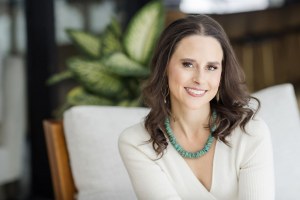
Kristell Court is a Coach, Consultant, and Creative who helps high-capacity women navigate transitions, rebuild sustainable capacity, and lead from the season they’re in. She is the North America Circle Leader for Women Belong and creator of Capacity Compass, a coaching partnership designed to help women build lives and businesses that honour both their ambition and their humanity.
Content provided by Women Belong member Kristell Court





































 The Mothership
 Connections - ZOOM Networking Event
 SFG: Tending the Sleeping Garden: Herbal Nourishment for Fall and Winter
 Book Club: Hark: How Women Listen - ZOOM
 Holiday Party - ZOOM